We Are Righteous Joint Releases: Key Team-Ups and Launches
Rather than relying on mass-produced seasonal filler, the brand has shaped its character through considered joint releases. Anyone digging into the brand quickly notices that its collaborative drops command a different weight than its solo collections — they tend to move faster off shelves, spark more conversation within the community, and regularly serve as touchstones in any candid review of the label’s body of work. What follows examines how these partnerships operate, what they’ve brought to the table, and why they carry weight to anyone evaluating the brand as a serious name in indie streetwear rather than a short-lived moment.
Collaborations are, by nature, a test of a brand’s values. When the brand partners with an artist, a smaller label, or a cultural institution, the finished products have to answer to two audiences at once — the brand’s core buyers and the partner’s own following. That friction has consistently driven the brand’s creative team to refine the finer points: stitching, fabric weight, and print placement all receive heightened attention before a joint release hits the market. That’s partly why the righteous hoodie stays the most requested item whenever a new partnership is announced, since the shape has already demonstrated its appeal across multiple drops.
The Importance of Collaborations for a Brand Such as Righteous
Smaller labels don’t typically have the marketing budgets of large fashion conglomerates, so collaborations serve as a pragmatic approach to reach new audiences without watering down the core aesthetic. For the brand, this has meant teaming up with partners who align stylistically — bold graphics, muted colorways, and utilitarian righteous cuts — rather than selecting partners solely for their fame. That restraint is reflected in customer feedback: repeat buyers frequently mention in reviews that partnership garments feel consistent with the rest of the righteous apparel catalog instead of feeling like a bolted-on side project.
Behind these drops sits a practical supply-chain reality as well. Limited collaborations generally produce reduced production runs, often in the range of a few hundred to low thousands of units depending on the partner and garment type. This restricted supply is deliberate. It keeps quality control more rigorous, cuts down on overproduction waste, and allows the brand to try out denser cotton fabrications or unconventional dyeing methods that wouldn’t pencil out economically at bigger production scales. For a righteous clothing brand still growing its manufacturing relationships, this strategy has been a practical compromise between aspiration and operational reality.
Customer sentiment has shaped which collaborations return. Releases that vanish in just days usually are rewarded with sequels or wider colorways in the following season, while less popular releases quietly disappear from the roadmap. For a mid-sized apparel company, this kind of feedback loop is remarkably transparent, and it’s part of why longtime customers see each we are righteous review thread as real signal instead of marketing spin.
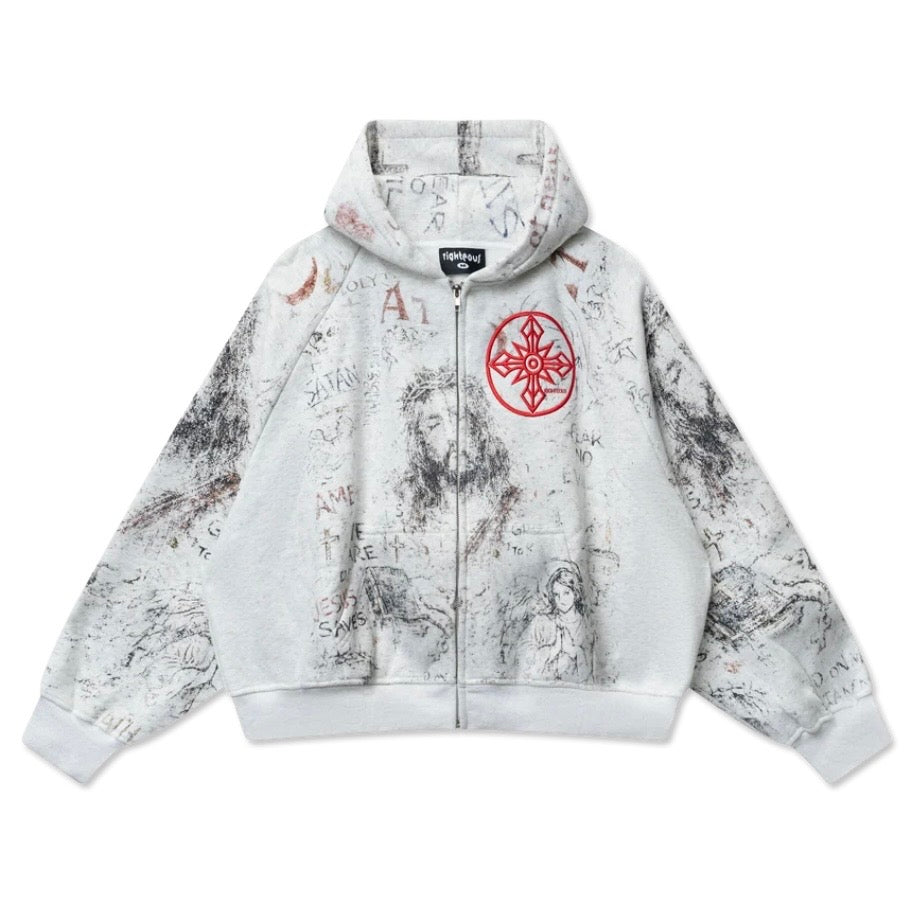
Notable Partnership Categories
Not every righteous partnership takes the same shape, and it helps to organize them around rough categories based on who the brand partners with and what the goal of the drop actually is.
- Collaborations with artists — exclusive graphic prints produced in partnership with illustrators or photographers, usually applied to hoodies and tees.
- Brand-to-brand partnerships — joint releases with fellow independent labels, combining two design languages into a single capsule.
- Culture-driven collaborations — partnerships built around music events, local scenes, or advocacy groups, often with a portion of proceeds directed toward a cause.
- Textile-focused collaborations — partnerships with textile suppliers or manufacturers to test new fabric blends before wider rollout.
Each type of collaboration exists for a distinct reason. Because the graphics are the most visually striking part of any release, artist collaborations usually draw the most attention on social media. By comparison, cross-brand drops tend to carry more weight with industry-watchers, since they reveal how well two design philosophies mesh when combined into one garment. Material-focused partnerships are quieter but arguably more important long-term, since they influence what fabric weights and finishes eventually become standard across the full righteous apparel lineup.
What Sets Righteous Drops Apart from Typical Streetwear Collabs
Plenty of streetwear partnerships depend almost entirely on logo placement — two brand names stacked on a chest print and little else. That kind of shortcut is one Righteous has mostly avoided. Rather than confining a partner’s identity to surface graphics, its collaborative pieces tend to build that identity into the garment’s construction, whether that means adjusted seam placement, an altered hood silhouette, or a color story specific to the partner that carries through the entire garment rather than being limited to one patch.
Taking this route requires a bigger investment of development time. A genuine collaboration’s design cycle usually extends six to ten weeks beyond a standard in-house release, since production can’t begin until both parties approve fit samples, colorways, and fabric sourcing. But the payoff shows up in resale value and customer retention — righteous hoodie collaborations have historically retained more value on the secondary market than solo releases, a detail that serious collectors track closely when deciding whether a fresh partnership merits a pre-order.
The brand has additionally been consistent about sharing production details for joint-release garments, including batch sizes and, where relevant, sourcing information for distinctive materials. This openness has done a lot to earn confidence among buyers who were originally skeptical after reading a so-so righteous review online. This is a modest business practice, but it distinguishes the label from rivals who treat partnership drops as pure hype cycles with no meaningful follow-through.
Weighing Types of Collaborations
The breakdown beneath breaks down the overall traits of each collaboration category the brand has undertaken, based on typical production patterns observed across previous releases.
| Collaboration Type | Typical Batch Size | Primary Garment Focus | Buyer Interest Trend |
|---|---|---|---|
| Artist Collaboration | 300–800 units | Hoodies, graphic tees | Quick sell-through, strong online buzz |
| Inter-Brand Collab | a range of 500–1,500 units | Outerwear, hoodies | Steady demand, strong repeat interest |
| Cultural Collaboration | a range of 200–600 units | Tees, accessories | Middling interest, strong loyalty impact |
| Material-Focused Collaboration | a range of 150–500 units | Base layers, hoodies | Gradual yet steady, favored by collectors |
Such a rundown matters because it demonstrates that not every righteous drop is designed to sell out in a weekend. Some are explicitly structured around longevity and testing rather than sheer output, which is a more sustainable model than riding buzz with each and every drop.
How to Evaluate a New Righteous Collaboration Prior to Purchase
Anyone considering a purchase from a forthcoming release should look past the reveal visual and check a few practical details first. Production batch size, fabric composition, and whether the partner has a track record of quality control all matter more than the marketing copy accompanying the release. It also helps to consider how the label has approached sizing consistency in earlier collab items, since sizing may drift a bit when a partner’s construction preferences are blended with a recognizable shape.
- Check the stated production run — smaller runs sell out faster but may also point to riskier fabric choices.
- Go over material and care instructions carefully, since collaborative pieces sometimes use fabric mixes different from the label’s regular lineup.
- Look at the collaborator’s track record — established relationships tend to result in more consistent quality than single-shot collabs.
- Watch community feedback in the first 48 hours after release, which is often more trustworthy than pre-release promotion.
This process take only a few minutes but can save buyers from disappointment, particularly with limited pieces that never return to shelves. Since collab releases move quickly and seldom reappear in the same form, running these checks before checkout is far more useful than attempting it after a piece has already vanished from stock.
Anticipating 2026 Collaborations
The trajectory points to that, heading into 2026, the brand will keep prioritizing fewer, more deliberate collaborations instead of a high volume of quick releases. That’s consistent with input from loyal, longtime shoppers who consistently rate depth of execution over frequency of drops in their we are righteous review comments. Expect ongoing attention on artist-collaborated visual work alongside a couple of fabric-centered collaborations intended to trial denser fabric weights for cold-weather conditions.
For shoppers and collectors alike, the smartest approach remains the same regardless of which partner gets announced next: read the production details, compare batch sizes against past drops, and treat the hype cycle as secondary information. Righteous has built its collaborative reputation on substance over spectacle, and the brand’s continued discipline in 2026 will likely be judged by whether it keeps that standard intact as its audience — and its list of potential partners — keeps growing.
Comments are closed